
Delhi's Significant Heritage Monuments
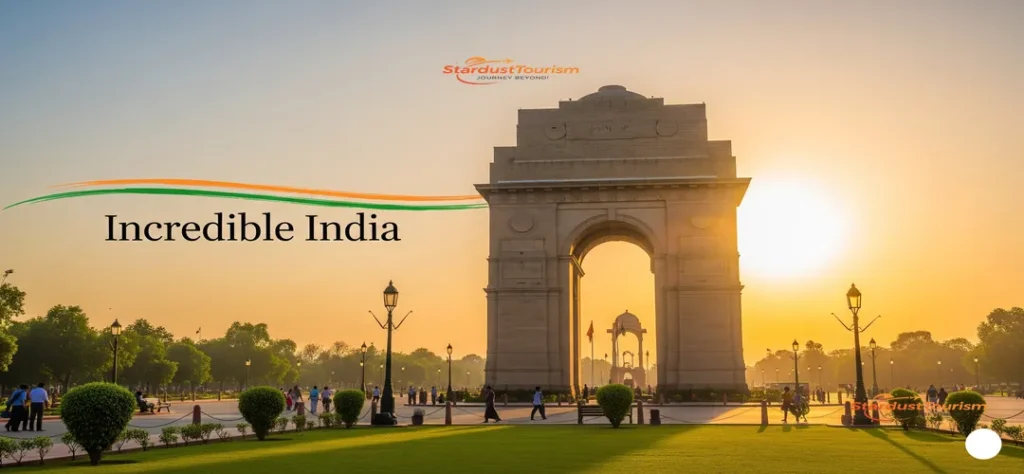
India Gate
India Gate is a prominent war memorial located in New Delhi, India. It’s a significant landmark with a rich history:
Purpose and Dedication 🇮🇳
India Gate, originally known as the All India War Memorial, was built to commemorate the 70,000 Indian soldiers who lost their lives fighting for the British Army during World War I (1914-1918) and the Third Anglo-Afghan War (1919). The names of over 13,000 soldiers, including some from the UK, are inscribed on its walls, immortalizing their sacrifice.
After India gained independence, another memorial called Amar Jawan Jyoti (Flame of the Immortal Soldier) was added in 1971 beneath the arch. This continuously burning flame honors Indian soldiers who have died in various conflicts since, particularly those who fell during the 1971 Indo-Pakistani War.
Construction and Design
The foundation stone of India Gate was laid by His Royal Highness, the Duke of Connaught, in 1921. It was designed by the renowned British architect Sir Edwin Lutyens, who was also the principal architect of New Delhi. The monument was dedicated to the nation by the then Viceroy, Lord Irwin, on February 12, 1931.
India Gate stands at a height of 42 meters and is built from red and yellow sandstone. Its architectural style is often compared to the Arc de Triomphe in Paris, evoking the design of ancient Roman triumphal arches. Lutyens blended Western architectural elements with a classical simplicity in its design. The arch is adorned with intricate carvings, including floral patterns and sunburst motifs, and bears the inscription “INDIA” flanked by the dates “MCMXIV” (1914) and “MCMXIX” (1919).
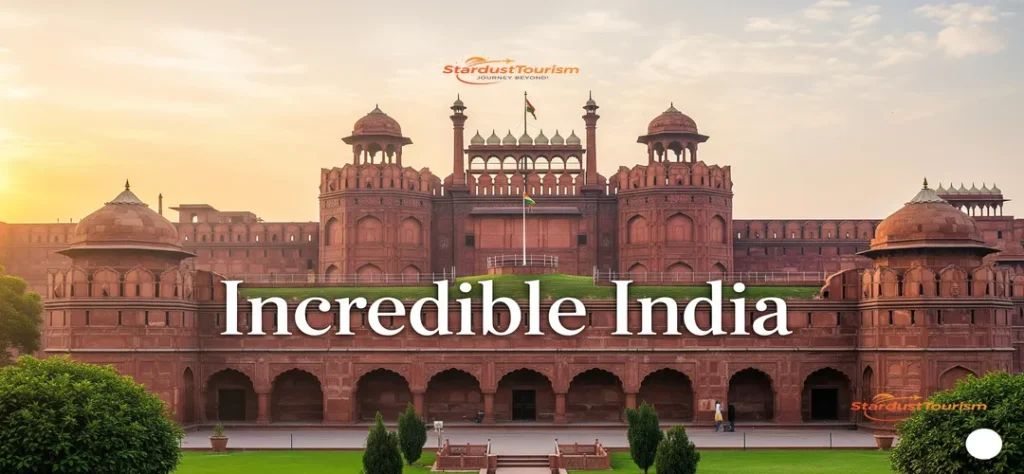
Red Fort
The Red Fort, or Lal Qila, in Old Delhi, India, is a historic fortress and a UNESCO World Heritage Site that epitomizes Mughal architecture. Built by Emperor Shah Jahan starting in 1639, it served as the main residence for Mughal emperors for nearly 200 years and was the political and ceremonial heart of the Mughal Empire.
History and Purpose:
Built by Shah Jahan: The Red Fort was commissioned by the fifth Mughal Emperor, Shah Jahan, who also built the Taj Mahal. He decided to shift his capital from Agra to a newly planned city, Shahjahanabad (present-day Old Delhi), and the Red Fort was to be its grand palace fort.
Construction: Construction began on May 12, 1639, and was largely completed by April 6, 1648, taking almost a decade.
Mughal Residence: For nearly 200 years, until 1857, the Red Fort served as the principal residence of the Mughal Emperors, becoming the political and ceremonial center of the Mughal Empire.
Post-Mughal Era: After the decline of the Mughal Empire, it was occupied by the British East India Company after the Indian Rebellion of 1857. The British made significant alterations, using parts of the fort as barracks and even demolishing some of its marble structures.
Symbol of Independence: Today, the Red Fort holds immense national significance. Every year on August 15th, India’s Independence Day, the Prime Minister hoists the national flag at the Red Fort and addresses the nation from its ramparts, commemorating India’s freedom from British rule.
Architecture and Design:
Mughal Zenith: The Red Fort is considered to represent the zenith of Mughal creativity and architectural refinement under Shah Jahan’s reign.
Architect: Its design is largely credited to Ustad Ahmad Lahori, who also worked on the Taj Mahal.
Red Sandstone: The fort gets its name from its massive enclosing walls, which are made of red sandstone. These defensive walls are nearly 2.4 kilometers long and vary in height from 18 meters on the river side to 33 meters on the city side.
Fusion of Styles: The planning of the palace is based on Islamic prototypes, but each pavilion showcases architectural elements typical of Mughal building, reflecting a beautiful fusion of Persian, Timurid, and Hindu traditions.
Key Structures within the Complex:
Lahori Gate and Delhi Gate: These are the two principal gates to the fort. The main entrance for visitors today is typically through the Lahori Gate.
Diwan-i-Aam (Hall of Public Audience): Where the emperor would address the public and hold court.
Diwan-i-Khas (Hall of Private Audience): A more ornate pavilion of white marble where the emperor met with dignitaries and private visitors. It was once home to the famous Peacock Throne.
Nahr-i-Behisht (Stream of Paradise): A continuous water channel that connected the private pavilions.
Rang Mahal (Palace of Colors): Originally the residence for the emperor’s wives and mistresses.
Mumtaz Mahal: Another palace within the fort.
Moti Masjid (Pearl Mosque): A small, three-domed mosque built in white marble, added later by Aurangzeb.
Hammams: Royal baths.
Hayat Bakhsh Bagh: A beautiful garden within the complex.
Innovative Influence: The Red Fort’s innovative planning and architectural style, including its garden design, strongly influenced later buildings and gardens in Rajasthan, Delhi, Agra, and beyond.
In essence, the Red Fort is not just a fort; it’s a living monument that embodies centuries of Indian history, architectural brilliance, and national pride.
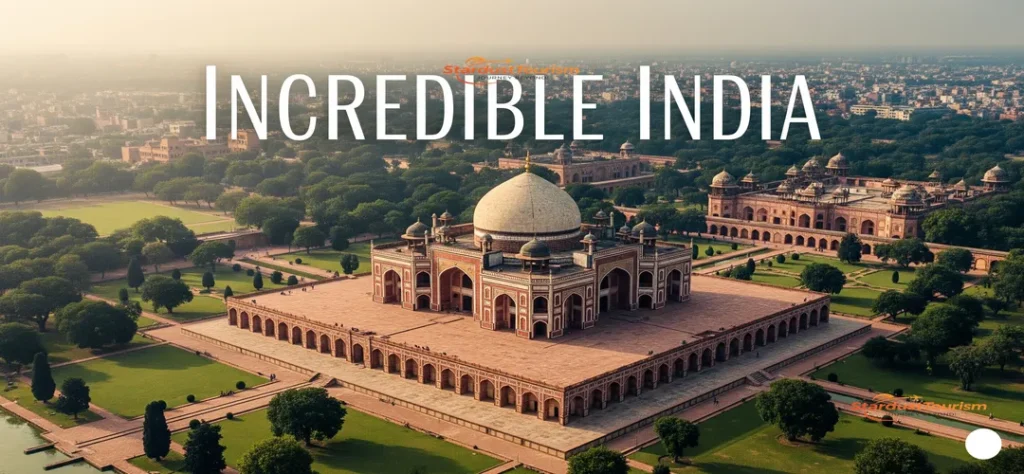
Humayun’s Tomb
Humayun’s Tomb was commissioned by Empress Bega Begum (also known as Haji Begum), the grieving first wife and chief consort of the second Mughal Emperor, Humayun. Construction began in 1569, about 14 years after Humayun’s death, and was largely completed by 1572. It cost 1.5 million rupees, fully funded by the Empress out of her deep devotion. The tomb was not Humayun’s initial burial place; his body was moved here from Purana Qila. Over time, the complex became a “necropolis of the Mughal dynasty,” housing the graves of over 150 Mughal family members, including various emperors and princes. Notably, it also served as a refuge for Bahadur Shah Zafar, the last Mughal emperor, during the Indian Rebellion of 1857.
Architecture and Design
The tomb’s design is attributed to Mirak Mirza Ghiyas, a Persian architect chosen by Bega Begum. It represents a pivotal moment in Mughal architecture, blending Persian and Indian architectural traditions.
Red Sandstone and White Marble: The primary material is red sandstone, beautifully contrasted with white marble used for the double dome and other intricate details.
Charbagh Garden: The tomb is set within a sprawling charbagh (“four gardens”) layout, a quadrilateral garden divided into four main parterres by walkways and shallow water channels. This design, symbolizing the gardens of Paradise mentioned in the Quran, was a significant Persian influence and became a hallmark of later Mughal architecture.
Double Dome: It was the first building in India to feature a double dome, a Persian innovation. This allows for a grand exterior appearance while maintaining a proportionate interior space. The main dome stands at 42.5 meters.
Octagonal Plan: The mausoleum itself has an irregular octagonal plan with chamfered corners. The central chamber, housing Humayun’s cenotaph, is surrounded by eight smaller chambers, reflecting the Islamic concept of “hasht bihisht” (eight heavens).
Intricate Details: The facades are adorned with deeply recessed arched alcoves (iwans), marble borders, panels, and perforated screens (jali work). The roof is crowned with pillared kiosks (chhatris), an Indian architectural element.
Influence and Legacy
Humayun’s Tomb is considered a landmark in the development of Mughal architecture. Its grand scale, innovative use of materials, double dome, and the charbagh garden setting set a new precedent for imperial mausoleums in India. Its architectural elements and overall design profoundly influenced the construction of the Taj Mahal nearly a century later, making it a crucial link in the evolution of Mughal monumental architecture. The site also includes other significant tombs like Isa Khan’s Tomb (predating Humayun’s), Nila Gumbad, and the Barber’s Tomb, making the entire complex a rich historical and architectural treasure.
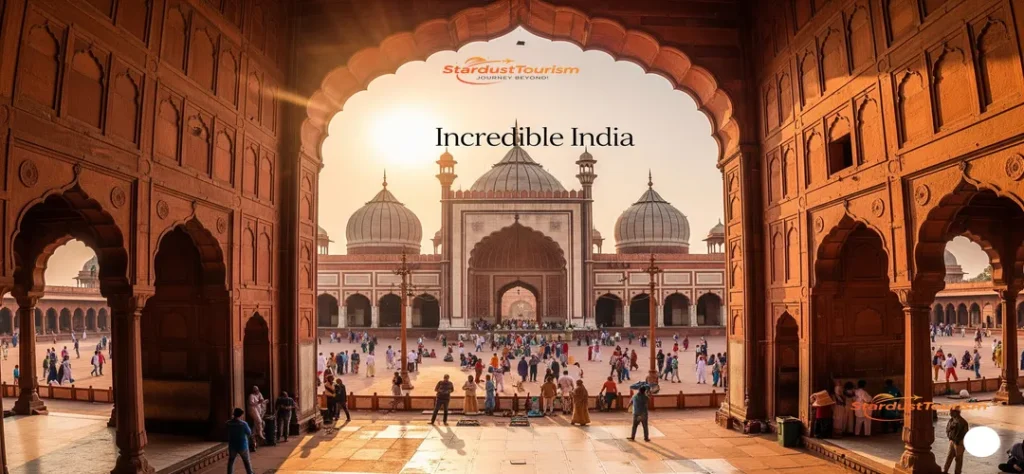
Jama Masjid
The Jama Masjid (also known as Masjid-i Jahan-Numa, meaning “world-reflecting mosque” or “world-displaying mosque”) is one of the largest and most magnificent mosques in India, located in Old Delhi. It stands as a powerful symbol of Mughal architecture and Islamic heritage.
Construction and History:
Built by Shah Jahan: The Jama Masjid was commissioned by the Mughal Emperor Shah Jahan, who is also responsible for iconic structures like the Taj Mahal and the Red Fort. He envisioned it as the principal mosque of his newly established capital city, Shahjahanabad (present-day Old Delhi).
Timeline: Construction began in 1650 AD and was completed in 1656 AD, taking approximately six years and involving around 5,000 workers.
Inauguration: It was inaugurated by Syed Abdul Ghafoor Shah Bukhari, an Imam from Bukhara (modern-day Uzbekistan), who was invited by Shah Jahan to be the first Shahi Imam (Royal Imam) of the mosque.
Imperial Mosque: For centuries, until the demise of the Mughal Empire in 1857, the Jama Masjid served as the imperial mosque where Mughal emperors would lead Friday prayers, a significant act that legitimized their rule.
Post-Mughal Era: After the Indian Rebellion of 1857, the British briefly seized the mosque, but public opposition prevented its destruction. Today, it remains an active place of worship and a major tourist attraction.
Architectural Features:
Red Sandstone and White Marble: The mosque is predominantly built from striking red sandstone, intricately contrasted with white marble used for domes, minarets, and decorative elements. This combination is characteristic of Mughal architecture.
Grand Scale: The Jama Masjid is colossal. It is situated on a high plinth, accessed by three majestic gateways (North, South, and East) with impressive flights of steps. The eastern gate was traditionally reserved for royal use.
Vast Courtyard: Its immense central courtyard is a defining feature, measuring approximately 99 meters square (325 feet square) and capable of accommodating over 25,000 worshippers at a time. In the center of the courtyard is an ablution tank for ritual cleansing before prayers.
Minarets: The mosque is flanked by two towering minarets, each around 40 meters (130 feet) high. These minarets are divided into three storeys, with projecting balconies, and offer panoramic views of Old Delhi from their top.
Domes: The main prayer hall is crowned by three large bulbous domes made of white marble with black stripes, reflecting the classic Mughal architectural style.
Prayer Hall: The spacious prayer hall faces west towards Mecca, as is customary for mosques. Its façade features eleven arched entrances, with the central arch being the largest and most prominent. The interior is adorned with intricate carvings, calligraphic inscriptions, floral motifs, and geometric patterns.
Fusion of Styles: The architecture of Jama Masjid showcases a beautiful fusion of Persian, Central Asian, and Indian architectural styles, representing the zenith of Shah Jahan’s building projects.
Significance and Legacy:
Religious Importance: It is Delhi’s principal mosque, serving as a crucial congregational mosque for Muslims, particularly for Friday communal prayers (Jum’ah) and Eid celebrations, drawing thousands of devotees.
Cultural Hub: Located in the heart of Old Delhi, the Jama Masjid is not just a place of worship but also a vibrant cultural hub. The bustling bazaars and street food stalls surrounding it add to its lively atmosphere.
Historical Relics: The mosque is said to house several sacred relics, including a copy of the Quran written on deerskin, a red hair from the beard of Prophet Muhammad, and his footprints on a marble block.
Tourist Attraction: Its architectural splendor and historical significance make it a major tourist attraction, drawing visitors from all over the world eager to experience its grandeur and soak in the historical and spiritual ambiance.
The Jama Masjid stands as a majestic testament to Mughal architectural genius and continues to be an integral part of Delhi’s rich cultural and religious fabric.
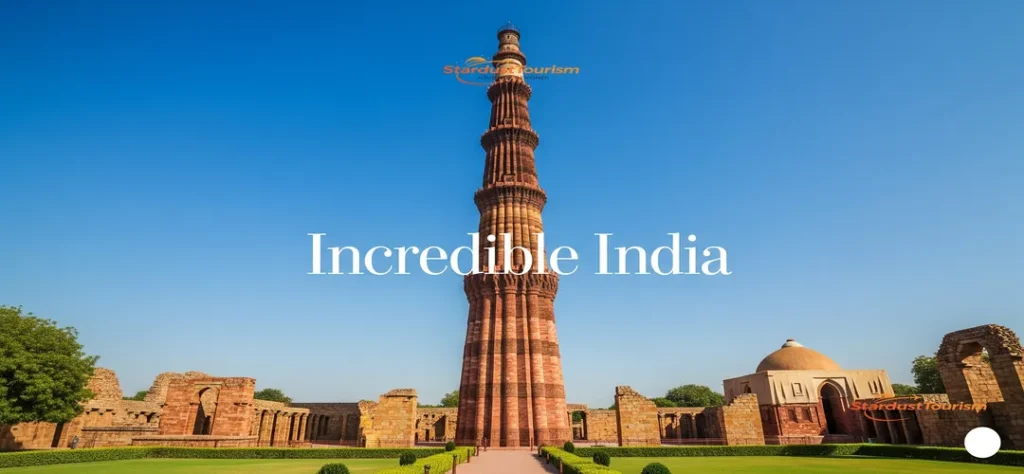
Qutub Minar
The Qutb Minar, located in the Mehrauli area of South Delhi, is a towering minaret and a prominent UNESCO World Heritage Site. It stands as an enduring symbol of early Indo-Islamic architecture and a testament to the beginning of Muslim rule in India.
History and Construction
The construction of the Qutb Minar was initiated by Qutb-ud-din Aibak, the founder of the Mamluk (Slave) Dynasty and the first Sultan of Delhi, in 1199 AD. It was built to commemorate the victory of Muhammad Ghori over the Rajput king Prithviraj Chauhan in 1192 AD, and also served as a minaret for the muezzin to call Muslims to prayer.
Phased Construction:
Qutb-ud-din Aibak only managed to complete the first storey (basement) before his death.
His successor and son-in-law, Shams-ud-din Iltutmish, added three more storeys (2nd, 3rd, and 4th) to the tower, completing it by around 1220 AD.
The minaret was damaged by lightning in 1368 AD, which knocked off its top storey. Firuz Shah Tughlaq, a later Sultan of Delhi, repaired the damaged storey and added a fifth one, using marble and sandstone, giving it its distinctive variegated look.
Further repairs and restorations were carried out by Sikandar Lodi in the early 16th century and later by Major R. Smith in 1829 during the British era, though Smith’s addition of a cupola was later removed as it looked out of place (now known as “Smith’s Folly”).
Inspired by Afghan Architecture: The Qutb Minar is believed to be inspired by the Minaret of Jam in Afghanistan, showcasing early Afghan architectural influences that later evolved into Indo-Islamic architecture.
Architectural Features
The Qutb Minar is primarily constructed from red and buff sandstone, with the upper storeys incorporating white marble.
Height and Structure: It is the tallest brick minaret in the world, standing at an impressive height of 72.5 meters (238 feet). It tapers from a base diameter of 14.32 meters to approximately 2.75 meters at its top. A spiral staircase of 379 steps leads to the summit.
Five Storeys: The minar consists of five distinct storeys, each marked by a projecting balcony supported by elaborately carved stone brackets with honey-comb designs (muqarnas corbels), particularly prominent in the first storey.
Inscriptions: Numerous inscriptions in Arabic and Nagari characters adorn the surface of the minaret, revealing its construction history, the rulers involved, and Quranic verses.
Fluted Design: The shaft of the minar is fluted with alternating angular and rounded flutings in the lower storeys, adding to its aesthetic appeal.
Indo-Islamic Fusion: The Qutb Minar is a prime example of the synthesis of Hindu and Muslim traditions in architecture. It was built by Hindu laborers and craftsmen under Muslim architects, leading to a unique blend of decorative motifs and construction techniques.
The Qutb Minar is part of a larger complex of historical monuments, which is also a UNESCO World Heritage Site. Key structures within the complex include:
Quwwat-ul-Islam Mosque: Located to the northeast of the minar, this was the first mosque built in Delhi after the Islamic conquest of India (begun by Qutb-ud-din Aibak in 1198 AD). It is historically significant for being constructed from the dismantled remains and carved columns of 27 Hindu and Jain temples.
Iron Pillar of Delhi: Standing in the courtyard of the Quwwat-ul-Islam Mosque, this remarkable 7.2-meter-high pillar dates back to the 4th century AD. It’s famous for its extraordinary resistance to rust, a testament to ancient Indian metallurgical skills. It bears a Sanskrit inscription indicating it was originally a Vishnudhvaja (standard of Vishnu) in memory of a king named Chandra (believed to be Chandragupta II).
Tomb of Iltutmish: Built in 1235 AD, this plain square chamber of red sandstone is profusely carved with inscriptions and geometric patterns, showcasing early Islamic architectural principles.
Ala’i Darwaza: This magnificent southern gateway to the Quwwat-ul-Islam Mosque was constructed by Ala-ud-din Khalji in 1311 AD. It is considered a masterpiece of Indo-Muslim art and the first building in India to employ true Islamic principles of construction and ornamentation, featuring true arches and a dome.
Ala’i Minar: Also commenced by Ala-ud-din Khalji, this unfinished tower was intended to be twice the size of the Qutb Minar but only its first storey (approximately 25 meters high) was completed before his death.
The Qutb Minar and its surrounding complex offer a compelling journey through early Islamic history and architectural evolution in India, making it a must-visit landmark in Delhi.
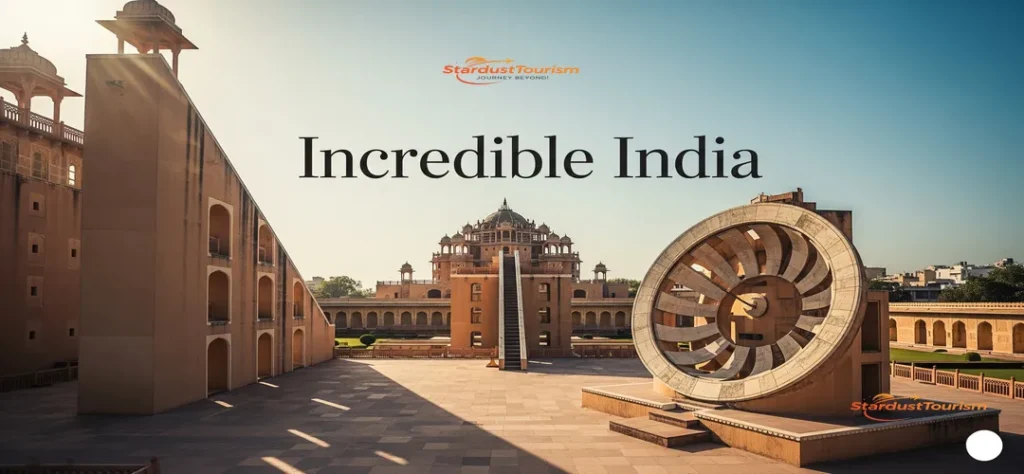
Jantar Mantar
The Jantar Mantar in Delhi is a fascinating astronomical observatory built in the 18th century, standing as a remarkable testament to India’s scientific prowess and architectural ingenuity during that period. It is one of five such observatories constructed by Maharaja Sawai Jai Singh II of Jaipur across India.
History and Purpose
Builder: The Jantar Mantar in Delhi was commissioned and built by Maharaja Sawai Jai Singh II of Jaipur. A keen astronomer, mathematician, and scholar, Jai Singh II was deeply interested in the study of celestial bodies and aimed to rectify the existing astronomical tables, which he found inaccurate.
Construction Period: While a plaque at the site mistakenly dates it to 1710, later research suggests the Delhi Jantar Mantar was completed around 1724. It was the first of the five observatories he built, with others located in Jaipur (the largest and a UNESCO World Heritage Site), Ujjain, Mathura, and Varanasi.
Objective: The primary purpose of the Jantar Mantar was to:
Compile accurate astronomical tables (known as “Zij-i Muhammad Shahi”).
Predict the times and movements of the Sun, Moon, and planets.
Determine local time with precision.
Observe celestial phenomena like eclipses and solstices.
Develop a more precise calendar.
“Jantar Mantar” Meaning: The name itself is derived from Sanskrit words: “Yantra” (instrument) and “Mantra” (formula or calculation), literally meaning “instruments for calculating the harmony of the heavens.”
Architectural Features and Instruments
The Jantar Mantar in Delhi is not a single building but an assembly of large-scale, fixed architectural instruments constructed from masonry, brick, and plaster. These instruments are designed to be used with the naked eye and are arranged in a unique open-air setting. The striking combination of geometric forms has garnered international attention from architects and artists.
The major instruments include:
Samrat Yantra (The Supreme Instrument): This is the largest and most prominent structure, essentially a giant equinoctial sundial. It stands 70 feet (21 meters) high, with a ramp-like hypotenuse that is parallel to the Earth’s axis and points towards the North Pole. On either side are two quadrants with precise graduations. Its immense size allowed for highly accurate timekeeping, reportedly up to two seconds. It also helped measure the declination of the Sun and other celestial bodies.
Jai Prakash Yantra: This instrument consists of two concave hemispherical bowls, with marked surfaces that represent an inverted image of the sky. Observers would align the position of stars with various markings to determine the coordinates of celestial bodies. Gaps in one hemisphere allowed observers to step inside and take readings.
Rama Yantra: Composed of two large circular buildings (cylindrical structures) with open tops and central pillars, the Rama Yantra was used to measure the altitude and azimuth (horizontal angle) of celestial objects, particularly the sun and planets, based on the Earth’s latitude and longitude.
Misra Yantra (The Mixed Instrument): This unique instrument is a composite of five smaller instruments. It could determine the longest and shortest days of the year and pinpoint the exact moment of noon in different cities, regardless of their geographical location. It also had gnomons oriented to the meridians of different cities, including Greenwich and Zurich (though this might be coincidental).
Significance and Legacy
Scientific Advancement: The Jantar Mantar represents a significant period of scientific inquiry and a remarkable attempt to advance astronomical knowledge in India using large-scale, fixed instruments, at a time when telescopes were already in use in Europe. Jai Singh’s observatories were an effort to create more accurate and permanent instruments than the smaller, less precise metallic instruments of the time.
Architectural Marvel: Beyond its scientific function, Jantar Mantar is an architectural marvel. Its abstract and monumental forms are both functional and visually striking, showcasing a unique blend of ancient wisdom and architectural design.
Cultural Heritage: It serves as a reminder of India’s rich intellectual and scientific heritage and its contributions to astronomy and mathematics.
Tourist Attraction and Public Space: Today, the Jantar Mantar in Delhi is a popular tourist attraction, drawing visitors interested in history, science, and unique architecture. Its central location also makes it a common venue for peaceful protests and demonstrations, symbolizing democratic rights and freedom of speech.
Preservation: While the Delhi Jantar Mantar is not a UNESCO World Heritage Site on its own, it is part of a series of Jantar Mantars, with the Jaipur Jantar Mantar holding the UNESCO status. Efforts are continuously made to preserve and restore this historical and scientific treasure.
The Jantar Mantar stands as a silent monument to the human quest for understanding the cosmos, reflecting a period when science and architecture converged in a grand pursuit of knowledge.
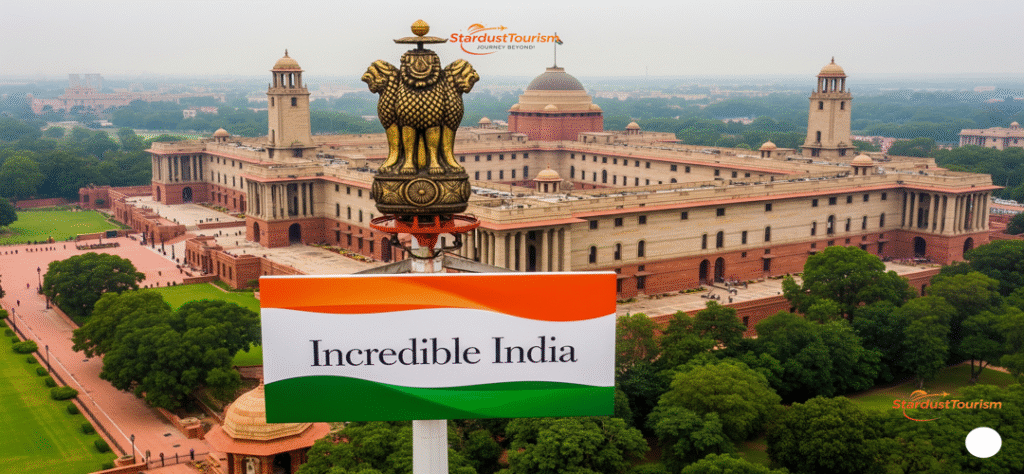
Rashtrapati Bhavan
The Rashtrapati Bhavan (Hindi for “Presidential Palace”) is the official residence of the President of India, located in New Delhi. It is an iconic landmark and a symbol of Indian democracy.
History and Purpose
Origins as Viceroy’s House: The idea for building Rashtrapati Bhavan arose in 1911 when the British decided to shift the capital of India from Calcutta (now Kolkata) to Delhi. It was initially conceived as the official residence for the Viceroy of India, the highest representative of British rule in the country.
Designed by Lutyens and Baker: The responsibility for designing New Delhi and the Viceroy’s House fell primarily to Sir Edwin Lutyens, with Herbert Baker as his associate who designed the adjacent Secretariat buildings (North and South Blocks). Lutyens famously wanted the building to be a grand statement of British imperial power.
Construction: Construction began in 1912 and took about 17 years to complete, finishing in 1929. It involved immense labor and materials, with reports of 700 million bricks and 3 million cubic feet of stone being used, and around 29,000 workers involved at its peak.Post-Independence Transformation: After India gained independence in 1947, the building ceased to be the Viceroy’s House. On January 26, 1950, when India became a Republic, it was officially renamed Rashtrapati Bhavan and became the permanent residence of the President of India. Dr. Rajendra Prasad was its first occupant as President.
Architectural Features
Rashtrapati Bhavan is a magnificent example of Indo-Saracenic Revival architecture, a style that blends European (Neo-classical) and Indian architectural elements. Lutyens, though initially preferring European styles, incorporated several Indian motifs at the insistence of Lord Hardinge, the then Viceroy.
Grand Scale: It is one of the largest residential buildings for a head of state in the world. The main building itself covers an area of 5 acres and houses 340 rooms spread over four floors, with approximately 2.5 kilometers of corridors. The entire Presidential Estate spans a massive 330 acres.
Fusion Design:
European Elements: The dominant influence is classical European, seen in its symmetrical layout, grand columns (like the Tuscan pillars in the Forecourt, sometimes referred to as the “Delhi Order” by Lutyens, incorporating temple bells), and overall monumental scale.
Indian Elements: Mughal and other Indian architectural elements are seamlessly integrated. These include:
Chhatris: Dome-shaped pavilions on the rooftop, breaking the flatness of the roofline.
Jali work: Intricately carved stone screens (red sandstone grilles), inspired by Rajasthani design.
Chhajjas: Projecting eaves (around 8 feet) that provide shade from the intense sun and protection from monsoon rains.
Motifs: Carved elephants, cobra figures, and temple bells (inspired by a Jain temple in Moodabidri, Karnataka) are subtly incorporated into the design.
The Dome: The most striking feature is its prominent dome, a blend of European and Indian influences. Lutyens reportedly drew inspiration from the Pantheon in Rome, but its form also echoes the Buddhist stupa at Sanchi, creating a distinctly Indian character. This dome is emblematic and visible from a great distance.
Durbar Hall: A magnificent circular hall under the main dome, used for state ceremonies, including the swearing-in of ministers. It houses a large statue of Lord Buddha.
Ashok Hall: Used for ceremonial functions and decorated with a Persian-style carpet and paintings.
Banquet Hall: Can seat over a hundred guests and features a unique lighting system that signals butlers.
The Presidential Estate and Mughal Gardens
The Rashtrapati Bhavan is not just the main building but an entire estate that includes:
Mughal Gardens (Amrit Udyan): Covering 15 acres, these world-renowned gardens were designed by Lutyens in 1917, combining traditional Mughal garden styles (terraces, water channels, geometric patterns) with elements of English flower gardens. They feature a vast array of roses (159 varieties), bougainvillea, and other flora. The gardens are opened to the public annually during the “Udyanotsav” festival (usually February-March).
Museum Complex: The estate also houses the Rashtrapati Bhavan Museum Complex (RBMC), comprising the Clock Tower, Stables, and Garages, which showcase the history of past presidencies, ceremonies, and the estate’s flora and fauna.
Staff Quarters and Utilities: The vast estate includes residences for staff, stables, and other necessary facilities.
Significance
Rashtrapati Bhavan is more than just a residence; it is:
Symbol of Indian Democracy: It represents the power and authority of the world’s largest democracy and its secular, plural, and inclusive traditions.
National Pride: It instills a sense of pride and represents the continuity of India’s democratic journey from colonial rule to independence.
Architectural Landmark: It is a major architectural achievement, showcasing a successful blend of diverse influences.
Seat of Power: It is where the President of India carries out constitutional duties, receives foreign dignitaries, and hosts state functions.
The Rashtrapati Bhavan stands majestically at the western end of Rajpath (now Kartavya Path), forming a crucial part of Lutyens’ Delhi and remaining a prominent and revered landmark in the national capital.
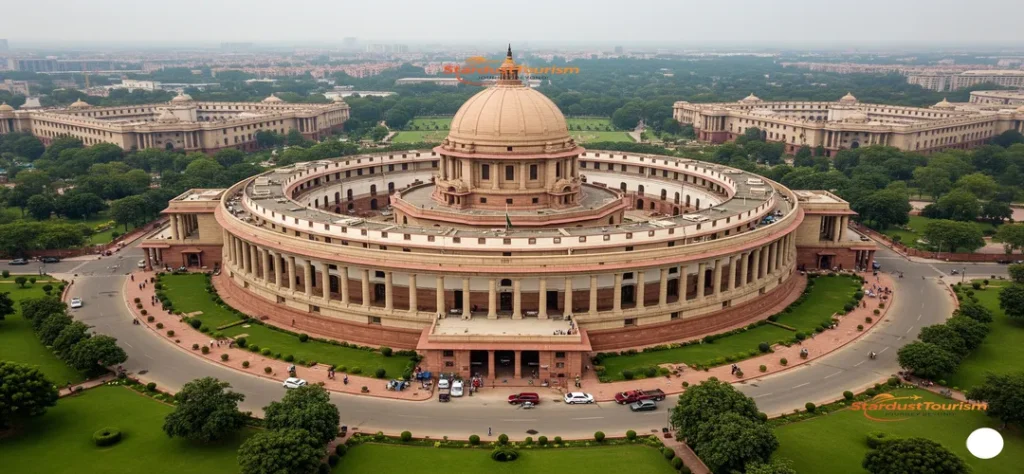
Parliament House (Old)
The Old Parliament House in New Delhi, officially renamed Samvidhan Sadan (Constitution House), is a monumental building that served as the seat of India’s Parliament for over 70 years. It stands as a significant symbol of India’s democratic journey, from its colonial past to its emergence as a sovereign republic.
History and Construction
Designed by Visionary Architects: The building was designed by the renowned British architects Sir Edwin Lutyens and Sir Herbert Baker, who were also instrumental in planning the entire layout of New Delhi. Their vision was to create a grand administrative center for the British Raj.
Foundation and Inauguration: The foundation stone for the building, then known as the Council House, was laid by HRH Prince Arthur, Duke of Connaught and Strathearn, in February 1921. Construction took approximately six years, and it was inaugurated on January 18, 1927, by the then Viceroy of India, Lord Irwin.
Purpose during British Rule: Initially, it housed the Imperial Legislative Council of India. It was a key part of the new imperial capital being built at Raisina Hill.Post-Independence Role: After India gained independence in 1947, the building became the seat of the Constituent Assembly of India from 1947 to 1950. It was within these hallowed halls that the Constitution of India was drafted and adopted. Once India became a Republic on January 26, 1950, it officially became the Parliament of India, housing both the Lok Sabha (lower house) and Rajya Sabha (upper house).
Architectural Features
The Old Parliament House is an architectural marvel, known for its distinctive circular design, which Lutyens reportedly proposed for efficiency given the triangular plot of land.
Circular Design: The building has a striking circular perimeter, with a circumference of approximately one-third of a mile and a diameter of 560 feet.
Columns and Sandstone: Its exterior is adorned with a grand colonnade of 144 creamy sandstone columns on the first floor, giving it a majestic appearance.
Indo-Saracenic and Classical Fusion: The architectural style is a blend of classical European architecture (inspired by Greece and Rome) with elements and decorative motifs drawn from traditional Indian architecture. This can be seen in features like intricate jali work, chhajjas (overhanging eaves), and other subtle Indian influences.
Central Hall: At the heart of the building is the circular Central Hall. This historically significant space was where the Constituent Assembly deliberated and where the transfer of power from British rule to independent India took place on August 15, 1947, with Jawaharlal Nehru delivering his famous “Tryst with Destiny” speech. The Central Hall has also been used for joint sessions of both houses of Parliament and for addresses by foreign heads of state.
Semicircular Halls: Surrounding the Central Hall are three semicircular halls that were originally built for the Chamber of Princes (now the Library Hall), the State Council (later used for the Rajya Sabha), and the Central Legislative Assembly (later used for the Lok Sabha).
Later Additions: Two additional floors were added to the structure in 1956 to accommodate the growing need for space.
Significance and Current Status
The Old Parliament House has witnessed pivotal moments in India’s history:
Birth of Indian Democracy: It was here that the foundation of modern India was laid through the drafting and adoption of its Constitution.
Hub of Legislation: For over seven decades, it served as the legislative heart of India, where countless laws were debated, passed, and where the nation’s policies were shaped.
Repository of History: It has been described as a “repository of India’s history” and its “democratic ethos,” bearing witness to colonial rule, world wars, the struggle for freedom, and the challenges and triumphs of an independent nation.
With the inauguration of the New Parliament House on May 18, 2023, and the shifting of parliamentary proceedings to the new building in September 2023, the Old Parliament House has transitioned from its primary legislative function.
Renaming: It has been officially renamed Samvidhan Sadan (Constitution House), honoring its role in the creation of India’s Constitution.
Future Use: The building will be conserved as an archaeological and architectural asset of the country. Plans include retrofitting it to provide more functional spaces for parliamentary events, and there are proposals to convert parts of it into a Museum of Democracy or to house parliamentary offices and archives, ensuring its legacy continues to inspire future generations.
The Old Parliament House stands majestically at the western end of Rajpath (now Kartavya Path), forming a crucial part of Lutyens’ Delhi and remaining a prominent and revered landmark in the national capital.
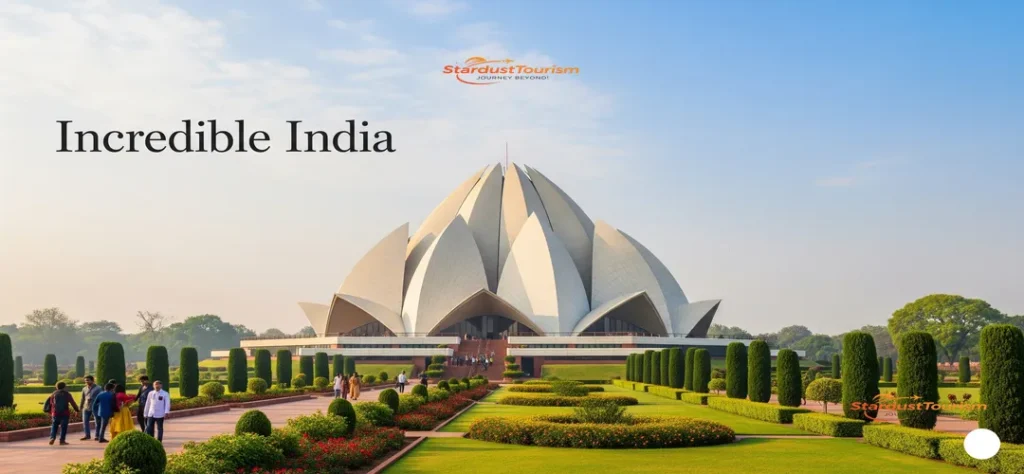
Lotus Temple
The Lotus Temple, located in New Delhi, India, is a distinctive and globally recognized architectural marvel. It is a Baháʼí House of Worship and is notable for its unique lotus-like shape, symbolizing purity, peace, and universality.
History and Purpose
Faith it Represents: The Lotus Temple serves as the Mother Temple of the Baháʼí Faith in the Indian subcontinent. The Baháʼí Faith is a monotheistic religion that emphasizes the spiritual unity of all humankind and the oneness of God, religion, and humanity.
Architect: The temple was designed by Iranian-Canadian architect Fariborz Sahba. He was commissioned to design the temple in 1976 and oversaw its construction.
Construction and Opening: The foundation stone was laid on October 19, 1977. The construction, undertaken by ECC Construction Group of Larsen & Toubro Limited, took approximately 10 years and was completed in December 1986. It was officially opened to the public on December 24, 1986.
Funding: A significant portion of the funds for the land acquisition was donated by Ardishír Rustampúr of Hyderabad, Sindh, who gave his entire life savings for this purpose.Purpose: Like all Baháʼí Houses of Worship, the Lotus Temple is open to all people, regardless of their religion, race, gender, or any other distinction. It is a place for silent prayer, meditation, and reflection. There are no idols, statues, or ritualistic ceremonies within the temple. Readings from the holy scriptures of all major world religions are periodically chanted, reinforcing the Baháʼí principle of the unity of religions.
Architectural Features
The most striking feature of the Lotus Temple is its design, inspired by the lotus flower, which holds deep symbolic significance across various religions in India, including Hinduism, Buddhism, and Jainism, representing purity and divinity.
Lotus Shape: The building is composed of 27 free-standing marble-clad “petals” arranged in clusters of three to form nine sides. These nine sides correspond to the nine entrances that open onto a central prayer hall. The unique arrangement of petals gives the impression of a half-opened lotus flower floating on water.
Materials: The exterior surface of the temple is made of gleaming white marble from Penteli mountain in Greece, the same marble used in the construction of ancient monuments like the Parthenon. The internal surfaces of the petals are bush-hammered concrete.
Central Hall: The grand central hall is approximately 34 meters (112 feet) high and has a seating capacity of around 1,300 people, with a total capacity of up to 2,500. It is designed to be naturally lit, with light filtering through the inner folds of the “petals,” similar to how light passes through a real lotus flower.
Nine Pools: The temple is surrounded by nine reflecting pools of water, which not only enhance its beauty by giving the impression of the temple floating but also contribute to the natural cooling system of the building. Fresh air, cooled as it passes over the fountains and pools, is drawn into the central hall and expelled through a vent at the top.
Landscape: The temple is set amidst 26 acres of beautifully landscaped gardens, providing a serene and tranquil environment.
Significance and Recognition
Symbol of Unity: The Lotus Temple is a powerful symbol of unity, peace, and the harmonious coexistence of all religions. Its open-door policy welcomes people from all walks of life, fulfilling the Baháʼí principle of universal worship.
Architectural Excellence: It has received numerous architectural awards and accolades for its unique design and engineering prowess. It is considered a masterpiece of modern architecture and an example of biomimicry.
Most Visited Building: The Lotus Temple is one of the most visited buildings in the world, attracting millions of visitors annually. By 2001, it had drawn over 70 million visitors, and by April 2014, it had exceeded 100 million visitors, surpassing even the Taj Mahal in daily visitors at times.
Environmental Friendliness: It was the first major public building in Delhi to incorporate solar power, with solar panels contributing significantly to its electricity needs.
The Lotus Temple stands not just as a religious edifice, but as a testament to architectural innovation and a beacon of universal peace and harmony, truly embodying the spirit of “Incredible India.”
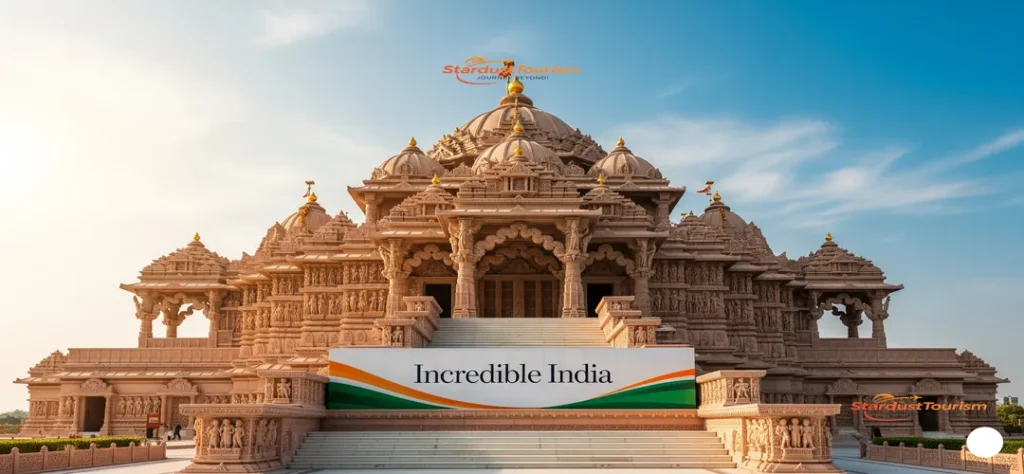
Swaminarayan Akshardham
Swaminarayan Akshardham in New Delhi, India, is a colossal and intricately carved Hindu temple complex. More than just a place of worship, it is a spiritual and cultural campus that showcases millennia of traditional Indian and Hindu culture, spirituality, and architecture. It stands as a testament to devotion, artistry, and the timeless values of Hindu philosophy.
History and Inspiration
Meaning of Akshardham: The word ‘Akshardham’ literally means “the divine abode of God.” It is considered by followers of the Swaminarayan faith to be a temporal home of God on Earth, an eternal place of devotion, purity, and peace.
Inspired by Yogiji Maharaj: The vision for a grand Akshardham complex in Delhi originated with Yogiji Maharaj (1892-1971 CE), the spiritual head of the Bochasanwasi Shri Akshar Purushottam Swaminarayan Sanstha (BAPS).
Created by Pramukh Swami Maharaj: His successor, Pramukh Swami Maharaj (1921-2016 CE), fulfilled this vision. He submitted the plan to the Delhi Development Authority in 1982, and after acquiring 90 acres of land in 2000, construction began.Construction: The complex was built by the BAPS organization with the devoted efforts of skilled artisans and volunteers. It took approximately five years to construct, involving over 8,000 volunteers and craftsmen, who poured more than 300 million volunteer hours into its creation.
Inauguration: Swaminarayan Akshardham was officially inaugurated on November 6, 2005, by Pramukh Swami Maharaj, in the presence of esteemed dignitaries including then-President of India A. P. J. Abdul Kalam and Prime Minister Manmohan Singh.
Architectural Marvel
The central monument of the Akshardham complex, the Akshardham Mandir, is a breathtaking example of traditional Hindu temple architecture, built entirely without the use of steel or concrete.
Materials: The main Mandir is constructed from Rajasthani pink sandstone (symbolizing devotion) and Italian Carrara marble (symbolizing purity), reflecting traditional Indian building materials and ancient Hindu architectural guidelines (Shilpa Shastras) for maximum temple life span.
Intricate Carvings: The temple rises 43 meters (141 ft) high, spans 96 meters (316 ft) wide, and extends 109 meters (356 ft) long. It is intricately carved with flora, fauna, dancers, musicians, and deities. It features 234 ornately carved pillars, nine domes, and an astonishing 20,000 murtis (sculptures) of swamis, devotees, and Hindu deities.
No Ferrous Metal: A remarkable engineering feat is that the entire temple is built without any ferrous metal, relying on interlocking stones and traditional construction techniques.
Gajendra Pith: At its base, the mandir features the Gajendra Pith, a plinth paying tribute to the elephant’s importance in Hindu culture and India’s history. It contains 148 life-sized elephants weighing a total of 3000 tons, intricately carved with stories and poses.
Main Deity: Under the temple’s central dome lies the 3.4-meter (11 ft) high murti of Bhagwan Swaminarayan seated in abhayamudra (gesture of fearlessness), to whom the temple is primarily dedicated. He is surrounded by murtis of the faith’s lineage of Gurus.
Mandapams: The interior boasts several ornately carved mandapams (halls) like the Swaminarayan Mandapam (central sanctum), Paramhansa Mandapam, Ghanshyam Mandapam, Lila Mandapam, Neelkanth Mandapam, Smruti Mandapam, and Sahajanand Mandapam, each telling stories and depicting various divine forms and historical events related to the Swaminarayan faith.
Key Attractions within the Complex
Beyond the main Mandir, the Akshardham complex offers a rich array of experiences:
Sahajanand Darshan (Hall of Values): This exhibition uses lifelike robotics and dioramas to display incidents from Bhagwan Swaminarayan’s life, portraying his messages about peace, harmony, humility, service, and devotion through 3-dimensional scenes with state-of-the-art technology.
Neelkanth Darshan (Large Format Film): An IMAX-like film, “Mystic India,” showcases the incredible seven-year pilgrimage of Bhagwan Swaminarayan as a teenage yogi, Neelkanth Varni, across the Himalayas and jungles of India.
Sanskruti Darshan (Cultural Boat Ride): This unique 12-minute boat ride takes visitors through 10,000 years of Indian history and heritage, showcasing ancient Vedic lifestyles, discoveries, and contributions to science, art, and spirituality through animatronic figures and dioramas.
Yagnapurush Kund (Musical Fountain): One of the largest step-wells in the world, this architectural marvel hosts the Sahaj Anand Water Show in the evenings. It’s a breathtaking spiritual multimedia presentation combining multi-color lasers, video projections, underwater flames, water jets, and surround sound, narrating an ancient story from the Kena Upanishad.
Bharat Upvan (Garden of India): A vast, lush garden featuring bronze statues of India’s child heroes, valorous warriors, national figures, and great women personalities, offering a place for reflection on the country’s rich heritage.
Narayan Sarovar: A sacred lake surrounding the main temple, filled with water from 151 holy lakes and rivers that Bhagwan Swaminarayan visited.
Abhishek Mandap: A place where devotees can participate in a ritualistic pouring of holy water (abhishek) over the murti of Neelkanth Varni for peace and fulfillment of wishes.
Lotus Garden: A symbolically designed landscape garden where each petal imparts wisdom through quotes from world luminaries, promoting universal truths and values.
Significance
Swaminarayan Akshardham is more than just a tourist attraction; it is a profound spiritual beacon.
Spiritual Hub: It serves as a center for cultural and spiritual enlightenment, offering a tranquil environment for meditation and reflection, and promoting timeless Hindu values.
Cultural Showcase: It showcases the grandeur and depth of India’s ancient art, architecture, and spiritual traditions, inspiring visitors with messages of peace, harmony, and service.
Global Recognition: It is recognized globally for its architectural splendor and its role in promoting universal values. It has garnered immense popularity, attracting millions of visitors annually, making it one of the most visited destinations in Delhi.
Swaminarayan Akshardham stands as a magnificent tribute to Bhagwan Swaminarayan, the avatars, devas, and great sages of Hinduism, and remains a powerful symbol of devotion, learning, and harmony in the heart of India’s capital.
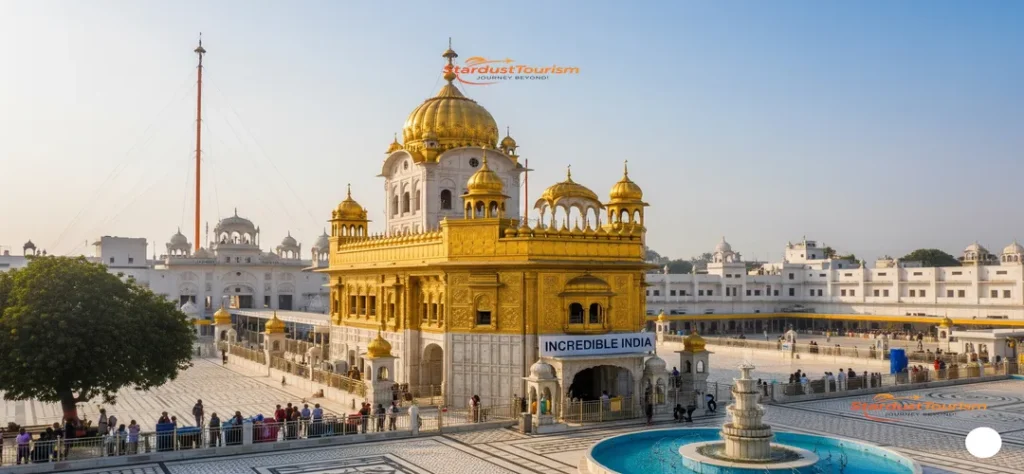
Gurdwara Bangla Sahib
Gurdwara Bangla Sahib is one of the most prominent and revered Sikh gurdwaras (Sikh houses of worship) in Delhi, India. Situated near Connaught Place on Baba Kharak Singh Marg, it is instantly recognizable by its stunning golden dome and tall flagpole (Nishan Sahib). It holds immense historical and spiritual significance for Sikhs and attracts millions of devotees and visitors from all walks of life, regardless of their faith.
History and Association with Guru Har Krishan
The history of Gurdwara Bangla Sahib dates back to the 17th century:
Original Structure: The site was originally a grand bungalow (hence “Bangla”) belonging to Raja Jai Singh, a prominent Rajput ruler and general in the Mughal Empire during the reign of Emperor Aurangzeb. It was known as Jaisinghpura Palace.
Guru Har Krishan’s Visit (1664 CE): The eighth Sikh Guru, Guru Har Krishan Ji, resided at this bungalow in 1664 during his visit to Delhi. He was summoned by Emperor Aurangzeb, though he refused to meet the emperor directly.
Service During Epidemic: At that time, Delhi was ravaged by a severe epidemic of smallpox and cholera. Guru Har Krishan, despite his young age (he was just 8 years old), selflessly attended to the suffering people. He provided aid and fresh, clean water from the well located within the bungalow to those afflicted. His compassionate service brought comfort and healing to many.
Guru’s Demise: Tragically, Guru Har Krishan himself contracted the disease while serving the ailing and passed away on March 30, 1664, in Delhi.
Conversion to Gurdwara: In honor of Guru Har Krishan Ji’s selfless service and his stay, Raja Jai Singh later donated the bungalow to the Sikh community. It was transformed into a gurdwara.
Reconstruction by Sardar Baghel Singh: In 1783, Sikh General Sardar Baghel Singh rebuilt it as a shrine. He was instrumental in constructing or renovating nine important Sikh shrines in Delhi during that period. The current magnificent structure has undergone further renovations and expansions, particularly post-1947, to accommodate the growing number of devotees.
Architectural Features
Gurdwara Bangla Sahib’s architecture is a blend of traditional Sikh and Mughal styles:
Golden Dome: The most striking feature is its glistening golden dome, which symbolizes divinity and is visible from a distance.
White Marble: The complex is primarily built with pristine white marble, contributing to its serene and majestic appearance.
Sarovar (Holy Pond): At the heart of the complex is the large Sarovar, a sacred pool of water. This water is believed to possess healing properties and is considered Amrit (nectar) by devotees. Many pilgrims take a dip in its tranquil waters, believing it purifies the soul and offers spiritual and worldly benefits. The Sarovar is regularly cleaned through a process called Kar Seva.
Main Prayer Hall (Darbar Sahib): The spacious and peaceful main prayer hall is where Gurbani (Sikh hymns) are sung, and the Guru Granth Sahib (the holy scripture of Sikhism) is continuously recited. The atmosphere is filled with profound spiritual resonance.
Community Service and Facilities
Gurdwara Bangla Sahib is renowned not only as a place of worship but also as a hub for selfless community service (seva), a cornerstone of the Sikh faith:
Langar (Community Kitchen): The most prominent service is the Langar, a free community kitchen that operates 24 hours a day. It serves simple, nutritious vegetarian meals to anyone who walks in, regardless of their background, caste, creed, or religion. This practice epitomizes the Sikh principles of equality, humility, and selfless service. Thousands of volunteers participate in preparing and serving meals daily.
Sarai (Accommodation): The complex also includes a Yatri Niwas (Pilgrim’s Rest House) or Sarai, providing accommodation for visitors and devotees.
Baba Baghel Singh Museum: Located within the complex, this museum chronicles the history of Sikhism, featuring paintings, historical documents, and artifacts that bring to life the teachings and sacrifices of the Sikh Gurus.
Educational and Healthcare Facilities: The Gurdwara complex also houses a higher secondary school and a hospital. In a remarkable initiative, in March 2021, the gurdwara inaugurated a highly affordable diagnostic center, offering MRI scans for as low as ₹50, aiming to provide healthcare for the poor.
Crisis Relief: In times of crisis, such as natural disasters or public health emergencies (like the COVID-19 pandemic), Gurdwara Bangla Sahib consistently steps up to provide shelter, food, and assistance to those in need, extending its langar services to healthcare workers and quarantined individuals.
Visiting Guidelines
When visiting Gurdwara Bangla Sahib, visitors are requested to:
Remove Shoes: Shoes must be removed and stored at designated counters before entering the complex.
Cover Head: Head must be covered as a sign of respect. Headscarves are usually available at the entrance, or visitors can bring their own.
Dress Modestly: Dress modestly, covering shoulders and legs.
Maintain Silence: Maintain silence and decorum within the prayer halls.
Photography: Photography is generally restricted inside the main prayer hall and certain areas.
Gurdwara Bangla Sahib is a vibrant and living symbol of Sikh faith, compassion, and community service. It offers a peaceful and uplifting experience for all who visit, embodying the Sikh message of “Sarbat da Bhala” (welfare of all).
Delhi's Convention Centers
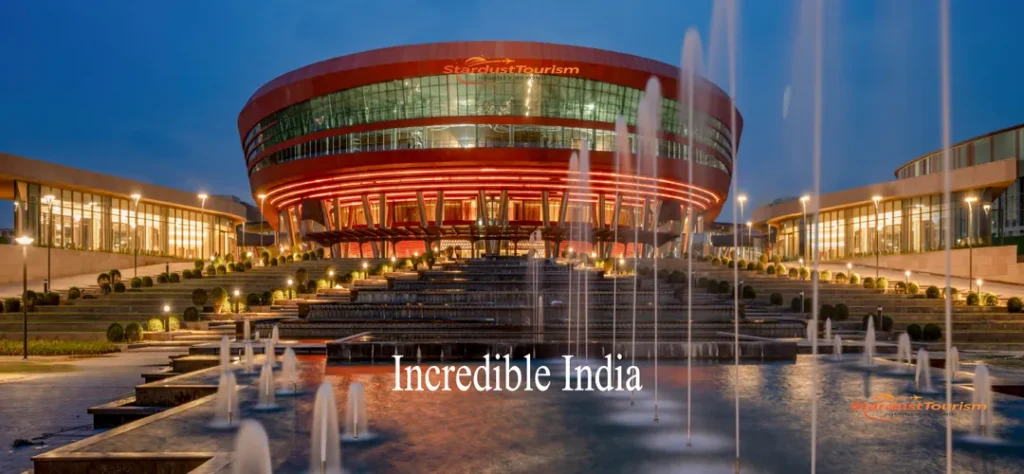
Bharat Mandapam PICC
Bharat Mandapam is a premier international exhibition-cum-convention center in New Delhi, inaugurated in July 2023. It’s one of India’s largest and most advanced venues, notably hosting the G20 Summit in 2023.
The design of Bharat Mandapam is inspired by the ‘Shankha’ (conch shell) and incorporates various Indian cultural motifs. It’s also an IGBC Platinum-rated green building, emphasizing sustainability.
With a combined seating capacity of over 7,000 people in its Plenary and Multi-Purpose Halls, it surpasses the Sydney Opera House in size. The center also features six large exhibition halls, various meeting rooms, an open-air amphitheater, and ample parking for over 5,500 vehicles.
Equipped with cutting-edge technology like 5G connectivity and integrated AV systems, Bharat Mandapam aims to establish New Delhi as a global MICE (Meetings, Incentives, Conferences, and Exhibitions) destination, showcasing India’s capabilities and heritage on the world stage.
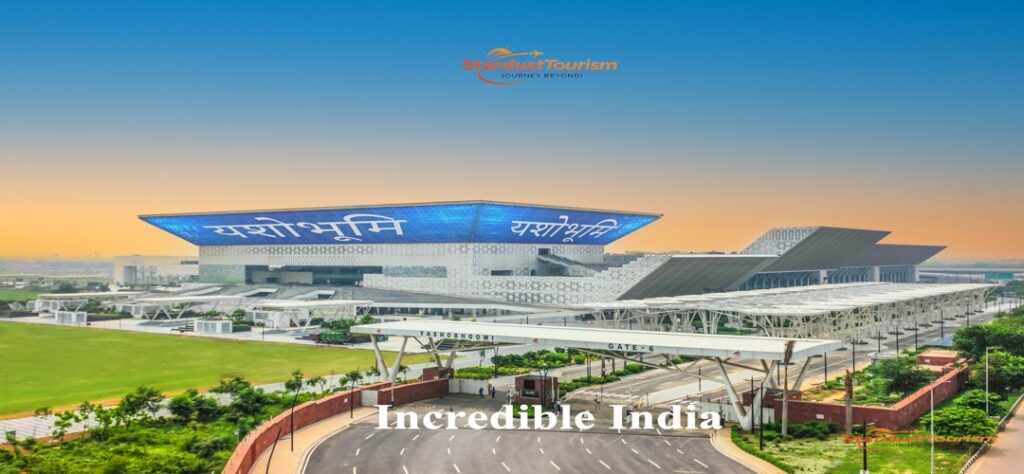
Yashobhoomi IICC
Yashobhoomi, officially the India International Convention & Expo Centre (IICC), is a monumental, state-of-the-art MICE (Meetings, Incentives, Conferences, and Exhibitions) destination located in Dwarka, New Delhi. Inaugurated in September 2023, it’s currently India and Asia’s largest convention center by area.
Designed as an IGBC Platinum-rated green building, Yashobhoomi blends contemporary architecture with Indian cultural elements. Its Phase 1 can accommodate 11,000 delegates across 15 convention rooms, including a 6,000-seat Main Auditorium. Upon full completion, it will feature five exhibition centers and a 20,000-seat multi-purpose arena.
The complex boasts extensive facilities like massive, column-free exhibition halls, numerous meeting rooms, VIP lounges, and diverse amenities. It offers excellent connectivity with a dedicated metro station on the Airport Express Line and is well-connected by major roadways, just 10-11 km from Delhi Airport. Yashobhoomi aims to significantly boost India’s position in the global MICE industry.
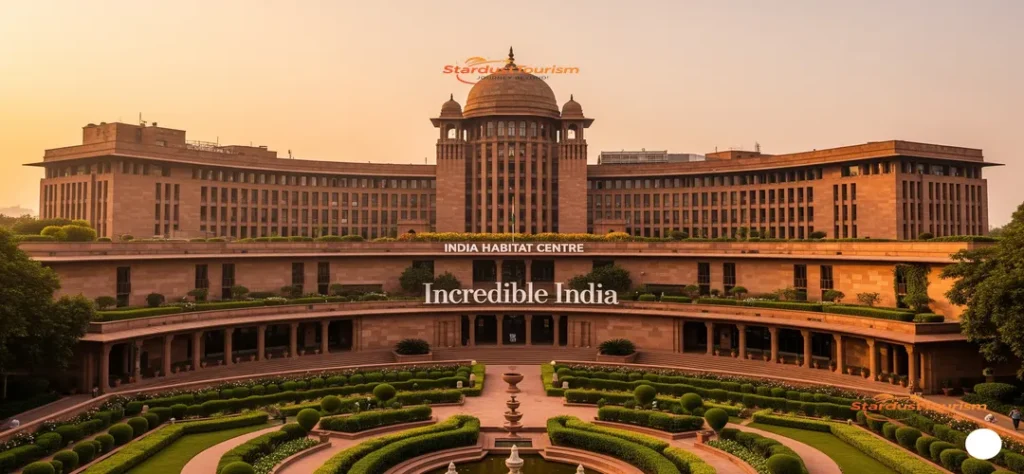
India Habitat Center (IHC)
The India Habitat Centre (IHC), opened in 1993 on Lodhi Road, New Delhi, is a prominent multi-purpose complex. Originally conceptualized to foster collaboration in habitat and environmental fields, it has grown into a significant cultural and convention hub.
Designed by Joseph Allen Stein, the IHC showcases a blend of contemporary architecture with Indian elements, featuring exposed brickwork. It provides extensive facilities, including:
Versatile Event Spaces: Multiple halls like the Stein Auditorium, The Theatre, and an Amphitheatre, suitable for conferences, performances, and banquets.
Art & Knowledge Hubs: Various art galleries (e.g., Visual Arts Gallery, Open Palm Court Gallery) and a comprehensive Habitat Library and Resource Centre (HLRC).
Diverse Dining: A wide array of restaurants such as EAST (Pan-Asian), Ann (Indian), MED (Mediterranean), and a food court (Habiteria).
Wellness & Accommodation: A health club (Habifit) with a gym, spa, and rooftop pool, along with guest rooms (Habitat Residency) for members.
The IHC is a vibrant center for cultural activities, regularly hosting film screenings (including the Habitat International Film Festival), music and dance performances, theatre, art exhibitions, and intellectual discussions.
It’s conveniently located, roughly 14 km from IGI Airport and about 1 km from the Jawaharlal Nehru Stadium Metro Station (Violet Line).
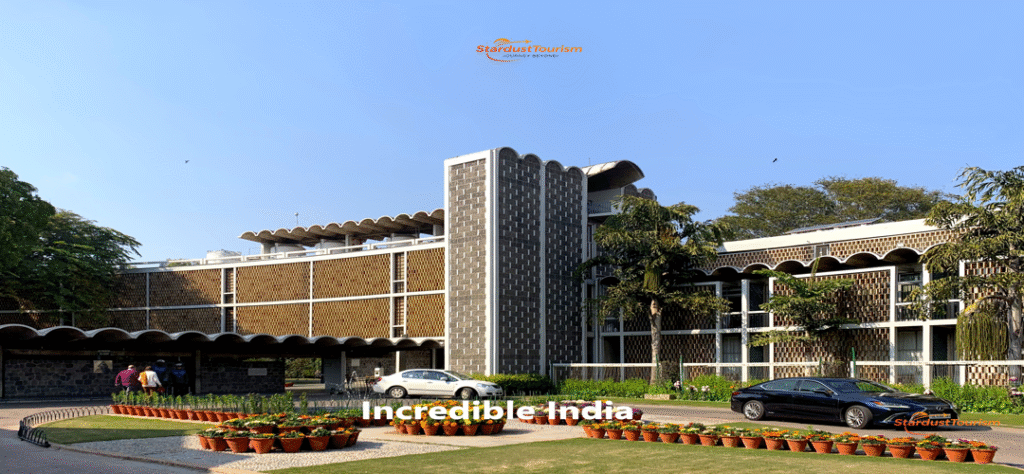
India International Center (IIC)
The India International Centre (IIC), founded in 1962 on Lodhi Road, New Delhi, is a distinguished non-governmental institution. Its core purpose is to promote global understanding and intellectual exchange, serving as a neutral platform for diverse communities to engage in dialogue.
Designed by Joseph Allen Stein, its architecture harmoniously blends modernist principles with Indian elements. The IIC boasts extensive facilities, including:
Event Venues: Auditoriums (like the C.D. Deshmukh Auditorium), multipurpose halls, conference rooms, and outdoor spaces for various events.
Accommodation: Residential facilities for members and their guests.
Dining: A range of restaurants offering diverse cuisines (Pan-Asian, Indian, Mediterranean), along with cafes and members-only lounges.
Knowledge Hubs: An expansive Library and Resource Centre and multiple art galleries.
Wellness: A health club with a gym, spa, and rooftop pool.
The IIC is renowned for its rich calendar of public programs, encompassing lectures, film screenings (including its own film club and festivals), music and dance performances, theatre productions, art exhibitions, and literary events. It’s well-connected, located adjacent to Lodhi Gardens, and easily accessible by metro and road.
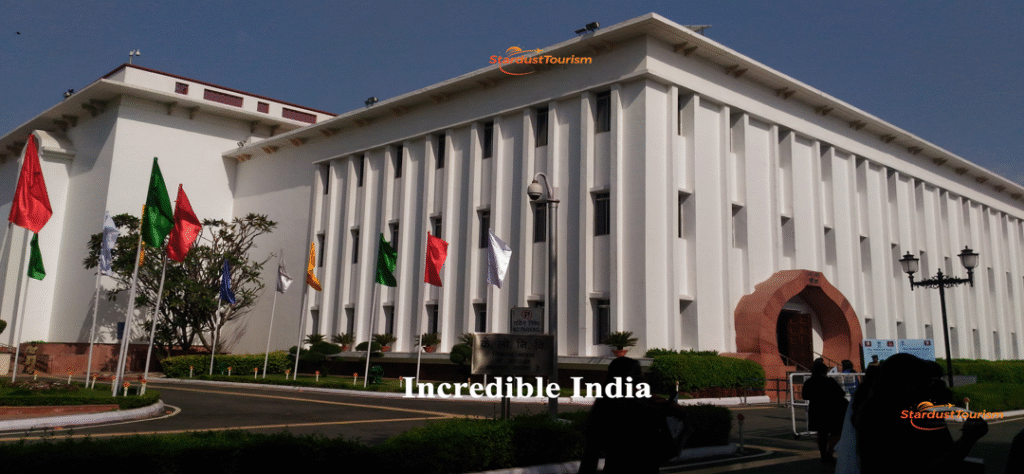
Vigyan Bhawan Convention Center
Vigyan Bhawan is a historic and prominent government convention center in New Delhi, built in 1956. It primarily hosts national and international events organized by various government bodies, especially those attended by high-ranking dignitaries and world leaders.
Architectural Blend: Its design combines British Raj, Hindu, Mughal, and ancient Buddhist influences.
Capacity: The main Plenary Hall seats over 1,200 delegates, complemented by several smaller conference halls.
Facilities: It includes an annexe, VIP lounges, dining options, and is equipped with modern conference technology like simultaneous interpretation and Wi-Fi.
Location: Strategically located on Maulana Azad Road, it’s central and well-connected by metro (Udyog Bhawan station).
Vigyan Bhawan has been a significant venue for major historical events and award ceremonies, though it is slated for demolition as part of the Central Vista Redevelopment Project.
Wellness: A health club with a gym, spa, and rooftop pool.
The IIC is renowned for its rich calendar of public programs, encompassing lectures, film screenings (including its own film club and festivals), music and dance performances, theatre productions, art exhibitions, and literary events. It’s well-connected, located adjacent to Lodhi Gardens, and easily accessible by metro and road.
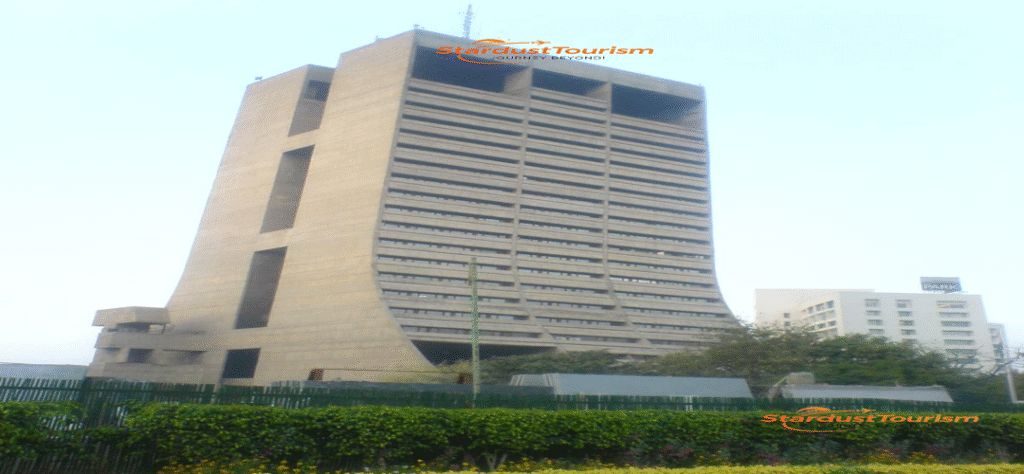
NDMC Convention Center
The NDMC Convention Centre is a prominent, centrally located venue in Connaught Place, New Delhi, managed by the New Delhi Municipal Council (NDMC). Its key advantage is its strategic position directly opposite Jantar Mantar, offering excellent connectivity via metro (Patel Chowk, Rajiv Chowk) and road.
The center features a main auditorium with a 300-person capacity, along with several smaller conference halls (two for 42 people each, and four for 12 people each). While the auditorium seats 300, the main hall can accommodate up to 1500 floating guests for social events like weddings.
Equipped with modern amenities such as central air conditioning, sound systems, projectors, and CCTV, the center also provides in-house catering (often through PSOI) and ample underground parking. It’s a versatile venue suitable for a wide range of events including conferences, seminars, corporate gatherings, exhibitions, wedding receptions, and cultural programs.
Wellness: A health club with a gym, spa, and rooftop pool.
The IIC is renowned for its rich calendar of public programs, encompassing lectures, film screenings (including its own film club and festivals), music and dance performances, theatre productions, art exhibitions, and literary events. It’s well-connected, located adjacent to Lodhi Gardens, and easily accessible by metro and road.
Shopping Hubs
Delhi is a dream come true for both shoppers and foodies! Many of its popular shopping hubs are also fantastic food destinations, especially for street food. Here’s a breakdown of some of the best places where you can indulge in both retail therapy and culinary delights:
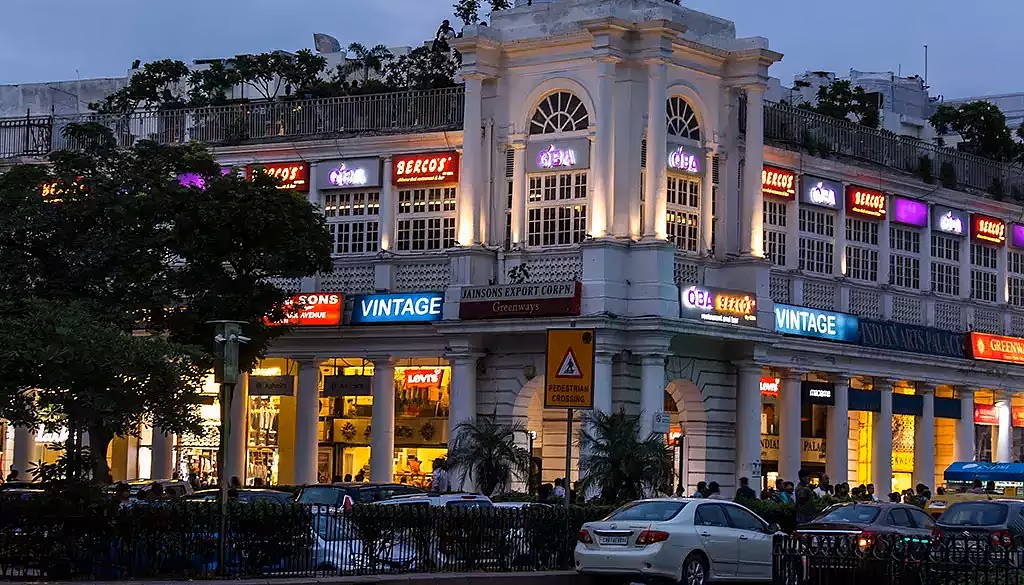
Connaught Place
Connaught Place (CP) is New Delhi’s central, circular business and leisure hub. Built in 1933 with Georgian architecture, it’s packed with shops, restaurants, and offices, centered around Central Park. It’s a bustling, well-connected landmark for shopping, dining, and entertainment.
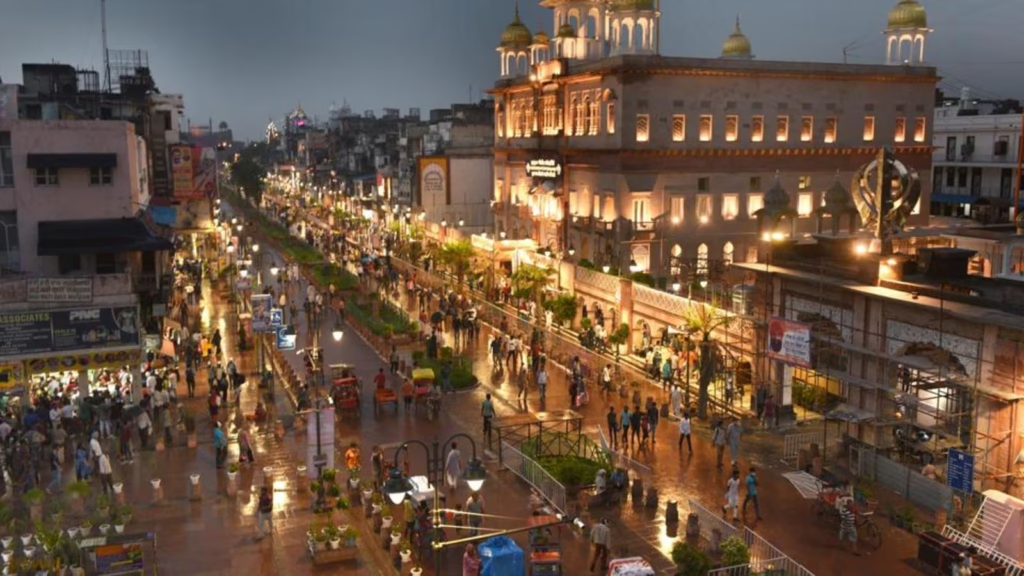
Chandni Chowk
Chandni Chowk is Old Delhi’s oldest and busiest market, established in the 17th century by Emperor Shah Jahan. It’s a chaotic but captivating hub known for its specialized wholesale bazaars selling everything from textiles and jewelry to spices and electronics. It’s also a famous foodie destination, offering iconic street food like parathas and jalebis. Despite modernization efforts, it retains its historical charm and is a vibrant blend of commerce, culture, and cuisine, easily accessible by Delhi Metro.
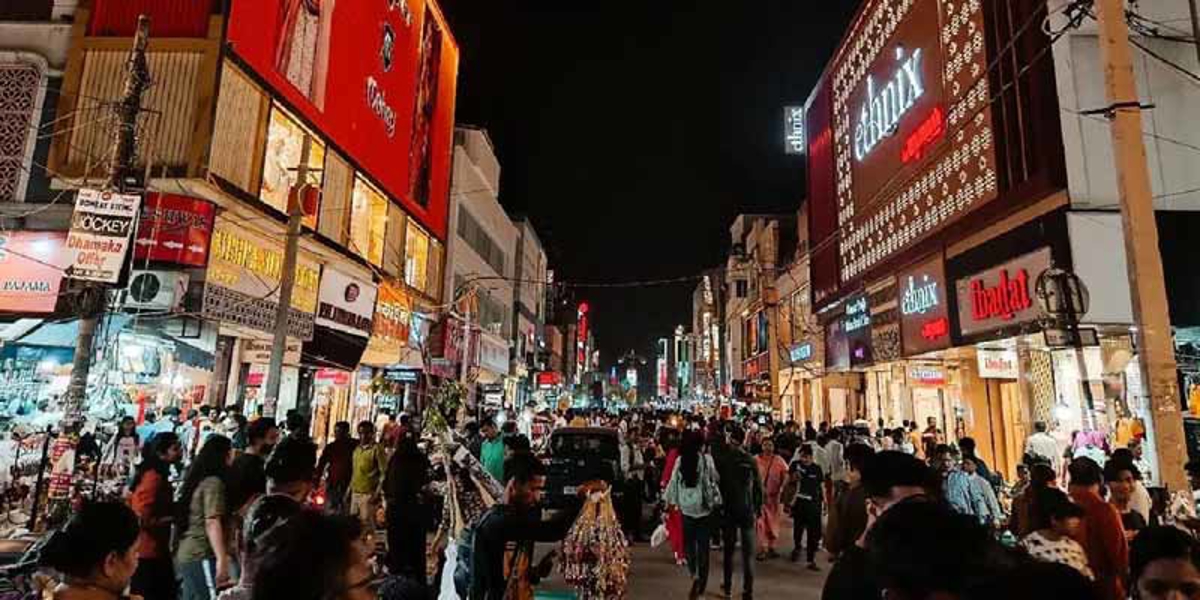
Karol Bagh
Karol Bagh is a bustling commercial and residential hub in Central Delhi, known as a diverse shopping destination. It offers everything from clothing (especially bridal wear and traditional Indian attire) and jewelry to electronics (Gaffar Market) and books (Arya Samaj Road). It’s famous for its bargaining opportunities and is a popular spot for both locals and tourists, easily accessible by the Karol Bagh Metro Station. It’s generally closed on Mondays.